
Press Release
CAFIA APPLAUDS SEN. COLLINS, SENATE APPROPRIATIONS COMMITTEE, AND TRUMP ADMINISTRATION FOR FULLY FUNDING GAVI, THE VACCINE ALLIANCE
State Department Commits the Full $600 Million Appropriated by Congress to Gavi, Which Has Helped Vaccinate More Than One Billion Children and Stops Deadly Outbreaks Before They Reach America’s Shores
7/29/2026, Washington, DC - Today, the Campaign for America First International Assistance (CAFIA) applauded Senator Susan Collins (R-ME), Chair of the Senate Appropriations Committee, her colleagues on the committee, and the Trump administration following the announcement that the State Department will contribute the full $600 million Congress appropriated in FY25 and FY26 to replenish U.S. funding for Gavi, the Vaccine Alliance. Gavi has helped vaccinate more than one billion children in the world’s poorest countries, stopping outbreaks of deadly diseases before they reach U.S. borders.
Said Nate Soule, Executive Director, “This is commonsense, America First international assistance at work. Senator Collins and the Senate Appropriations Committee stayed on this fight for months and made sure the dollars Congress approved were put to work, and Secretary Rubio and the Trump administration deserve real credit for helping get it done. For a tiny fraction of the federal budget, this $600 million commitment stops outbreaks of measles, cholera, polio, and Ebola overseas before they ever reach American shores, and it keeps the United States, not China, leading on global health. Every American is safer because of this decision.”
Chair Susan Collins announced the commitment on Tuesday after a sustained push by the committee. In May, Chair Collins and Vice Chair Patty Murray (D-WA), joined by Sens. Mitch McConnell (R-KY), Brian Schatz (D-HI), Lisa Murkowski (R-AK), and Jeanne Shaheen (D-NH), wrote to Secretary of State Marco Rubio urging the Department to restore U.S. contributions to Gavi. Chair Collins pressed the case again at the committee’s hearing on the State Department’s 2027 budget request.
“It is welcome news that following our recent outreach, the State Department has committed to contributing the full $600 million for GAVI, the Vaccine Alliance,” said Senator Collins in the committee’s announcement. “I have worked to ensure that the Department uses this funding Congress appropriated to replenish U.S. funding to GAVI, an organization that plays a critical role in averting the spread of preventable diseases globally and stopping outbreaks before they reach U.S. borders.”
New polling in Maine shows Republican and conservative voters squarely behind that decision. In a July 2026 McLaughlin & Associates statewide survey, 87% support U.S. investment in American-made technologies that can help end Ebola and save lives around the world, including 82% of Republicans, 79% of conservatives, and 79% of Trump voters. 77% of Maine Republicans support increasing international assistance to prevent the conditions that let terrorist groups grow, a higher share than the state as a whole, and 72% of Republicans back both American leadership in fighting Ebola abroad and early investment in preventing diseases like malaria before they require costlier responses later. By 64% to 9%, Maine Republicans also say that Senator Collins fighting for increased international assistance to keep diseases like malaria and Ebola from reaching American shores makes them more likely to vote for her. The Maine numbers match what Jim McLaughlin, President Trump’s pollster, has found nationally: 72% of Trump voters and 77% of Evangelicals support international assistance.
Since launching in November 2025, CAFIA has spent more than $4 million on campaigns in Congressional Districts and states across the country highlighting efforts by members of Congress that support international assistance that saves lives and keeps Americans safe.
NEW: CAFIA LAUNCHES TWO SIX-FIGURE INTERNATIONAL ASSISTANCE MEDIA CAMPAIGNS IN WI; CYCLE SPEND TOTALS $1.25M+
Organization Launches Two Six-Figure Media Blitzes Thanking Reps. Derrick Van Orden and Bryan Steil for Supporting International Assistance that Saves Lives and Keeps Americans Safe
More Than 7 in 10 Wisconsin Voters Support American-Made International Assistance
5/06/2026, Washington, DC - The Campaign for America First International Assistance (CAFIA) launched a six-figure paid media campaign across two of the most vulnerable Patriot members’ districts, thanking them for their support for international assistance. The latest CAFIA media campaigns focus on Reps. Derrick Van Orden (WI-3) and Bryan Steil (WI-1). Initial CAFIA polling demonstrates more than 70% of Wisconsin voters in these hotly-contested districts support American-made international assistance being sent abroad. Support for international assistance grows to nearly 8 in 10 across both seats when paired with the impact investments this aid can have on local economies and American-made products.
Since CAFIA launched last November, the 501(c)(4) has spent more than $1.25M fighting for international assistance programs and additional appropriations by Congress.
Said Nate Soule, Executive Director, “The results of CAFIA’s campaigns are resoundingly clear. Americans prefer leaders who support life-saving assistance to children and families, stop the spread of deadly diseases before they reach our shores, and strengthen America’s position against our enemies, Russia and China. American families recognize that our country’s strength abroad is critical to guaranteeing our national security and economic prosperity here at home. Congress must keep its promise to deliver America First policies this fiscal year, including preventing the spread of deadly diseases, saving starving kids, and ensuring we remain the world’s foremost superpower. Reps. Van Orden and Steil all have a chance to let America lead on these issues by continuing to fight for commonsense, America First international assistance.”
The spend is a full-court press across cable, CTV, texting, digital ads, and billboards.
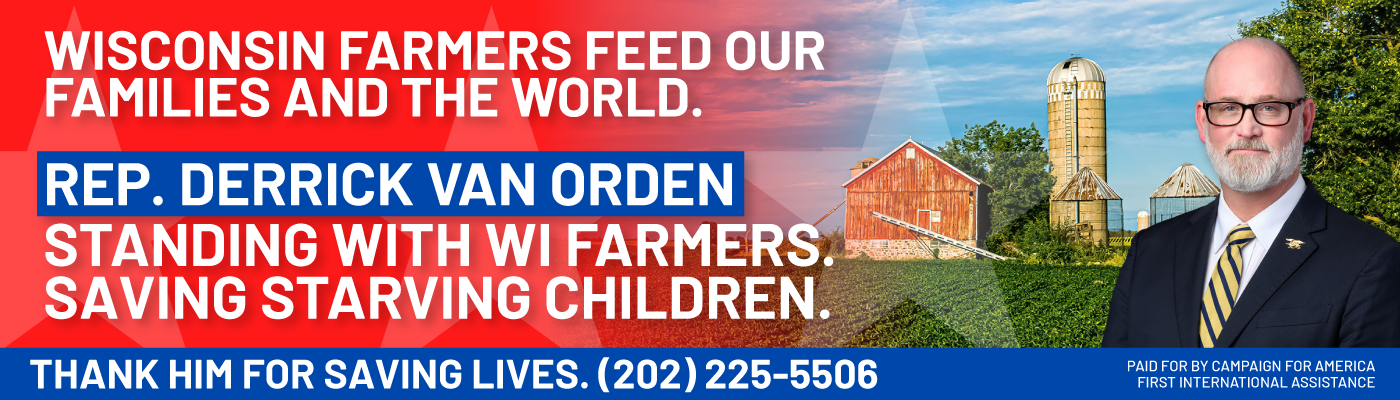
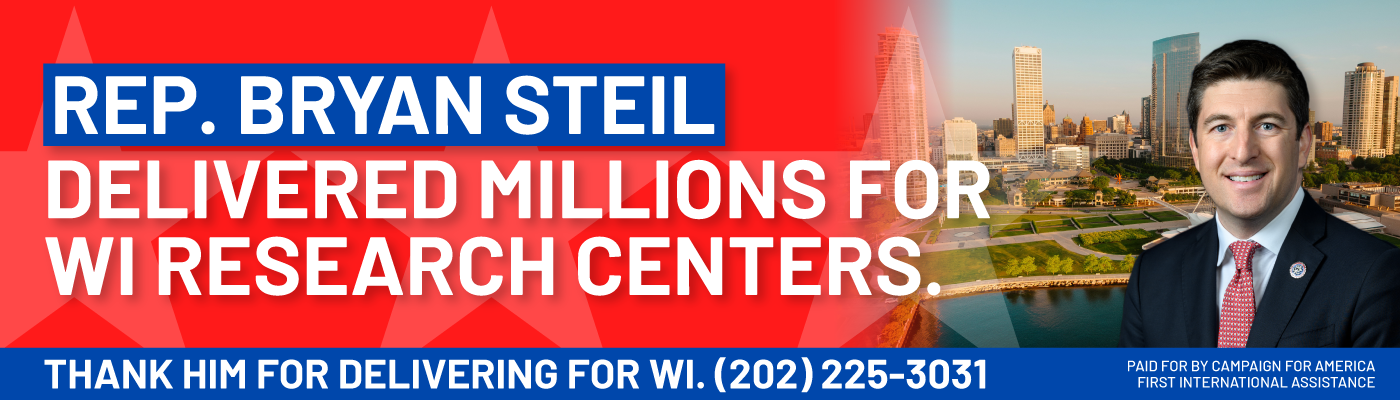
This campaign draws CAFIA’s total spending to over $1 million, having previously supported Republicans in highly contested seats. In Iowa, CAFIA supported Representatives Mariannette Miller-Meeks (IA-1) and Zach Nunn (IA-3). Meanwhile, in Arizona, Colorado, and Pennsylvania the organization’s campaigns targeted the districts of Representatives Juan Ciscomani (AZ-6), Gabe Evans (CO-8), and Rob Bresnahan (PA-8). The ads made clear that targeted American assistance abroad amounts to critical, tangible investments that support the health and economic wellbeing of working American families in those communities and across the country. The ads asked constituents to thank their members for voting to support the recent bipartisan appropriations package.
CAFIA’s work is supported by extensive polling that outlines the popularity of American foreign assistance with voters, particularly Republican voters. In tandem with its initial campaign launch, CAFIA released poll results from President Trump’s pollster, Jim McLaughlin, that found 72% of Trump voters and 77% of Evangelicals support international assistance. Months later, CAFIA’s work continues to prove effective. The organization’s investment in Iowa’s 1st Congressional District, for example, moved conservative, Republican, and Trump-supporting voters toward international assistance, in some cases by double digits in a single month.
-
Organization Launches Half-Million Media Blitz in Iowa Thanking
Reps. Miller-Meeks (IA-01) and Nunn (IA-03) for Investing in
Critical American International Assistance in FY26 Appropriations Package, which Returned Tens of Millions to Iowa Farmers and Small Businesses.Washington, DC - Nate Soule, former Chief of Staff to Rep. Mike Lawler (R-NY-17), joined the Campaign for American First International Assistance (CAFIA) as Executive Director to expand and build out the new organization’s capabilities and engagement in critical Congressional Districts across the country. This marks the beginning of a multi-seven-figure investment by CAFIA to increase the American public’s awareness of the merits of American international aid and assistance, with a heavy focus on swing districts and districts with a significant agricultural footprint.
Said Nate Soule, “For American international assistance to be successful, every American needs to understand the direct, tangible benefits in their own backyard that come from the investment abroad. The truth is that billions of dollars are reinvested in the American economy, creating tens of thousands of jobs in almost every state. Whether it’s soybean farmers in Iowa, peanut farmers in Georgia and California, packaging plants in North Carolina and Rhode Island, or dairy farmers in New York and Wisconsin, international assistance plays a critical role in so many local communities across our great country. We’re excited to bring these stories to the American public and ensure that Republicans, Democrats, and Independents in all 50 states support this critical funding year after year.”
In conjunction with Nate’s new leadership, CAFIA is launching a half-million-dollar media blitz across Republican Reps. Mariannette Miller-Meeks (IA-1) and Zach Nunn (IA-3). The ads demonstrate the critical investments made in Iowa farmers and the health of Iowa families, and call on Iowans to thank their members for voting to support the recent bipartisan appropriations package. The Iowa campaign focuses on how Americans benefit from jobs and greater security and health when the government solves global problems before they reach the country’s shores.
The spend is a full-court press across broadcast, cable, CTV, texting, digital ads, direct mail, and print ads.
CAFIA, a 501(c)(4), launched at the end of 2025 with a targeted $175,000 advertising campaign across three key competitive congressional districts to bolster support for international assistance. The advocacy efforts focused on the districts of Republican Representatives Gabe Evans (CO-08), Ryan Mackenzie (PA-07), and Juan Ciscomani (AZ-06), all listed on the NRCC’s Patriots list, where CAFIA ran ads hailing these lawmakers for their commitment to "America First" international assistance. These messages credited the representatives with advancing policies that fed starving children and combated Chinese influence abroad, while specifically prioritizing American-grown products and American-made goods.
The organization also released poll results from President Trump’s pollster, Jim McLaughlin, that found 72% of Trump voters and 77% of Evangelicals support international assistance. 75% of Republicans also support the Food for Peace program. Further, the poll found that when respondents were asked, “What percent of the federal budget do you believe is spent on international assistance programs?” only 9.5% of likely voters correctly answered “less than 1%.” The average guess was 12.3% of the federal budget, more than ten times the actual level. Most voters, including Trump voters, significantly overestimate what the U.S. spends.
-
Organization Launches Three Six-Figure Media Blitzes Thanking
Reps. Juan Ciscomani, Gabe Evans, and Rob Bresnahan for Supporting International Assistance that Saves Lives and Keeps Americans SafeWashington, DC - Today, the Campaign for America First International Assistance (CAFIA) launched a six-figure paid media campaign across three frontline Patriot members thanking them for their support for international assistance. The latest CAFIA media campaigns focus on Reps. Juan Ciscomani (AZ-6), Gabe Evans (CO-8), and Rob Bresnahan (PA-8), three of the most vulnerable Republicans in Congress.
Since CAFIA launched last November, the 501(c)(4) has spent $1M fighting for international assistance programs and additional appropriations by Congress.Said Nate Soule, Executive Director, “In poll after poll, Americans say when we invest in stopping deadly diseases abroad, get life-saving assistance to children and families, and prevent Russia and China from spreading their malign influence, we are doing the right thing in putting America First. In this upcoming fiscal year, it’s critical that Congress keep Americans safe from deadly diseases, save starving kids, and ensure we remain the world’s foremost superpower. Reps. Ciscomani, Evans, and Bresnahan all have a chance to let America lead on these issues by continuing to fight for commonsense, America First international assistance.”
The spend is a full-court press across cable, CTV, texting, digital ads, and billboards. This latest effort follows the half-million-dollar media blitz across Republican Reps. Mariannette Miller-Meeks (IA-1) and Zach Nunn (IA-3). Those ads demonstrated the critical investments made in Iowa farmers and the health of Iowa families, and call on Iowans to thank their members for voting to support the recent bipartisan appropriations package. The Iowa campaign focuses on how Americans benefit from jobs and greater security and health when the government solves global problems before they reach the country’s shoresPreviously, CAFIA launched at the end of 2025 with a targeted $175,000 advertising campaign across three key competitive congressional districts to bolster support for international assistance. These messages credited the representatives with advancing policies that fed starving children and combated Chinese influence abroad, while specifically prioritizing American-grown products and American-made goods.
At the time of launch, the organization also released poll results from President Trump’s pollster, Jim McLaughlin, that found 72% of Trump voters and 77% of Evangelicals support international assistance. 75% of Republicans also support the Food for Peace program. Further, the poll found that when respondents were asked, “What percent of the federal budget do you believe is spent on international assistance programs?” only 9.5% of likely voters correctly answered “less than 1%.” The average guess was 12.3% of the federal budget, more than ten times the actual level. Most voters, including Trump voters, significantly overestimate what the U.S. spends.
-
Campaign For America First International Assistance (CAFIA) to Initially Focus on Three RCCC Patriot Members Who Can Deliver Results for America Abroad
WASHINGTON, D.C. - Today, The Campaign for America First International Assistance (CAFIA), a 501(c)(4), announced the launch of three new ads in the districts of Reps. Juan Ciscomani, Gabe Evans, and Ryan Mackenzie, paired with the public release of new polling of voters across the country. This six-figure campaign focuses on how targeted, accountable, America First international assistance advances American security, protects taxpayers, and opens markets for U.S. workers—an approach rooted in American strength and leadership.
The spots released will be run on connected television in Arizona’s 6th District, Colorado’s 8th District, and Pennsylvania’s 7th District, to bolster their efforts to root out fraud, tamp down terrorism, secure our borders, support our small farmers, and feed starving children with their support of America First international assistance.
As part of CAFIA’s launch, the organization commissioned a survey of 1,200 likely voters, which found that when international assistance is focused on American priorities, voters respond positively and say they prefer leaders who champion this practical approach. Said John McLaughlin, "The majority of voters support international assistance that saves lives, improves global health, strengthens alliances, and bolsters national security and the economy."
POLL HIGHLIGHTS
A strong majority of Trump voters (72%) and Republicans (73%) support international assistance
77% of evangelicals support international assistance.
Independents who will play a critical role in deciding who wins the midterm elections are highly supportive (72%) of international assistance
Three-quarters of Trump voters (76%) and Republicans (76%) agree that “this kind of strategic investment in American leadership is consistent with President Trump’s America First vision.”
A majority of Americans (52%) believe that the cuts to international assistance earlier this year had a negative effect on America maintaining its position as a global superpower, with only 28% viewing such cuts positively.
Less than half of Trump voters (47%) and Republicans (46%) believe cuts to international assistance have a positive impact.
Reasons for Supporting International Assistance: national security by creating allies to counter dangerous influence from foreign adversaries like China, Russia, and Iran (35%); economic benefits for U.S. like increased jobs for American farmers and small businesses (23%); moral or religious obligation to help the most vulnerable (19%); and global leadership highlighting America’s strategic role in the world (16%). The priorities are similar among Trump voters, Republicans, Democrats, and Independents
Voters support moving international assistance oversight to the State Dept following the dismantling of USAID by a 47%-40% margin.
When asked, “What percent of the federal budget do you believe is spent on international assistance programs?” only 9.5% of likely voters correctly answered “less than 1%.” The average guess is 12.3% of the federal budget—more than ten times the actual level. Most voters, including Republicans and Trump voters, significantly overestimate what the U.S. spends.
A majority of Republicans agree President Trump would deserve the Nobel Prize for solving child starvation abroad.
Recent reporting underscores the stakes when life-saving programs lapse: humanitarian gaps can fuel instability, empower bad actors, and create conditions that ultimately cost Americans more. Lack of targeted, America First international assistance gives rise to terrorism, illegal immigration, and has adverse effects on small, American farms. In places like Myanmar and along the Thai border, aid shortfalls have coincided with dramatic increases in need and in crime, with desperate people often resorting to violence to feed their families.
About CAFIA
The Campaign for America First International Assistance (CAFIA) advances a practical, accountable approach to U.S. assistance that strengthens American security, supports American jobs, and upholds America’s leadership—always with strict oversight and measurable results.
Poll MethodologyThis survey was conducted among 1,200 likely voters between October 26-29, 2025. All interviews were conducted online. The interview distribution and demographics reflect a 2026 general election turnout model. The accuracy of the sample of 1,200 likely voters is within +/- 2.8% at a 95% confidence interval. The numbers in this memorandum have been rounded and may not equal 100%.